





Introduction
Every product and growth team eventually hits the same wall: users install the app, but don't discover the features that would make them stick around. The fix usually isn't a redesign — it's better in-the-moment communication. That's the job of an in-app engagement platform, and this guide covers what one actually is, what to look for, and how to evaluate options for your team.
What is an In-App Engagement Platform?
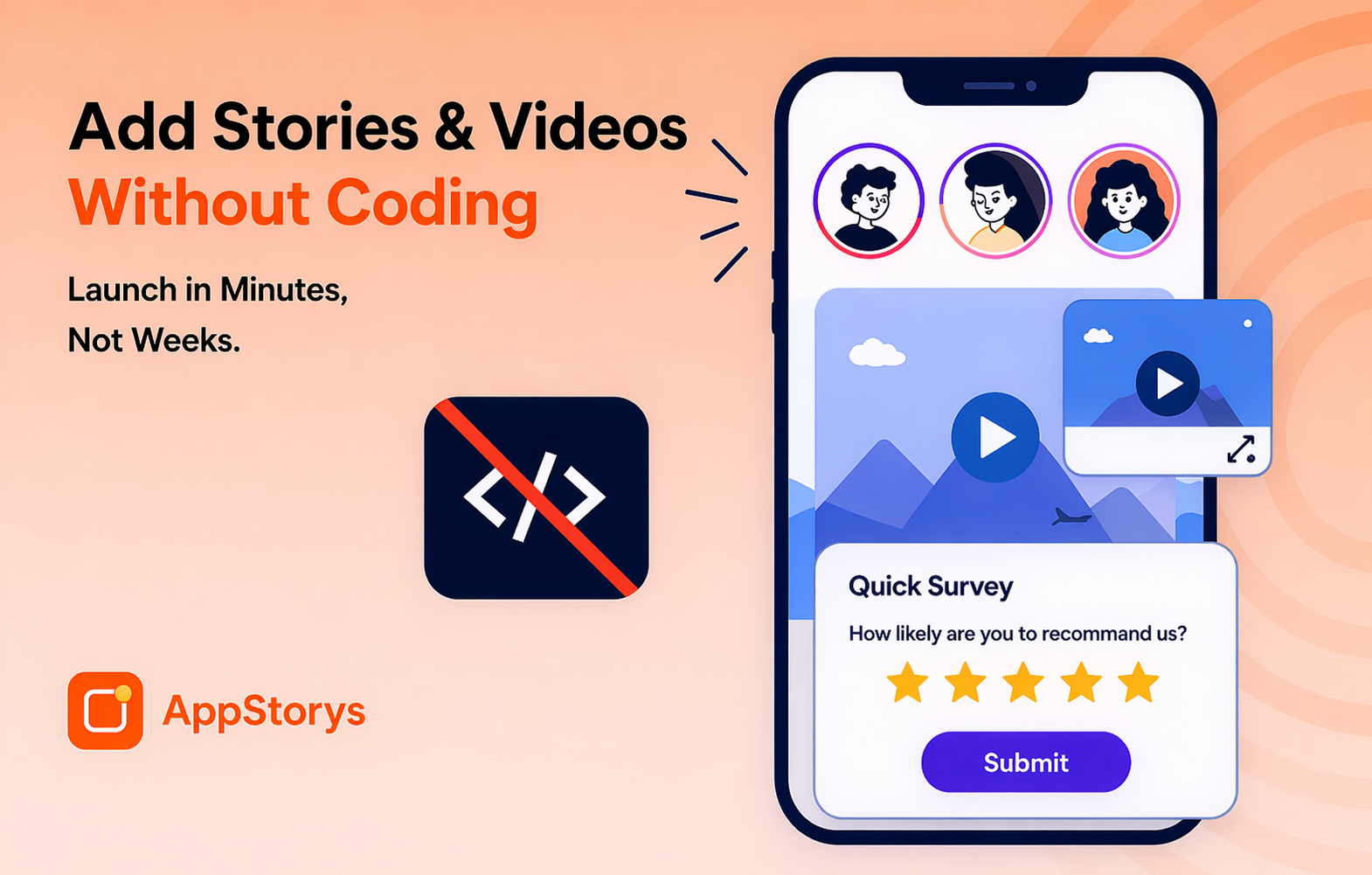
An in-app engagement platform is software that lets you add interactive content — stories, banners, tooltips, coach marks, surveys, and gamified experiences — directly inside your live app, targeted to specific user segments, without shipping a new app version for every change. Instead of hard-coding a "New Feature" banner into your app and waiting for the next release cycle, you configure it in a dashboard and it appears instantly for the audience you define.
Why In-App Engagement Matters
Acquisition is expensive and getting more expensive every year. The apps that win aren't necessarily the ones acquiring the most users — they're the ones converting installs into active, retained users. In-app engagement is the layer that sits between "user opened the app" and "user found lasting value," and it directly affects activation rate, feature adoption, and long-term retention.
Core Capabilities to Look For
Not every platform covers every use case. Here's what a genuinely comprehensive in-app engagement platform should support.
1. Onboarding & Walkthrough Tools
Coach marks, tooltips, and spotlights guide new users through key actions without overwhelming them with a static tutorial screen they'll skip anyway.
2. Rich Content Formats
Stories, reels, and PiP videos let you communicate visually instead of relying purely on text banners, which tend to get tuned out over time.
3. Targeting & Segmentation
The ability to sync cohorts from your existing analytics stack (Amplitude, Mixpanel, or your CDP) and target campaigns by behavior, not just broad demographics, is what separates a real engagement platform from a glorified pop-up builder.
4. Feedback & Measurement Tools
Surveys and CSATs close the loop — you need a way to hear from users directly, not just infer intent from click data.
5. Gamification
Scratch cards and quizzes add a layer of delight that plain banners can't, and are particularly effective for rewards, referral pushes, and re-engagement campaigns.
6. Cross-Channel Messaging
In-app content works best paired with push notifications, email, WhatsApp, and SMS, so users who aren't currently in the app still get pulled back at the right moment.
Buy vs Build: A Quick Gut Check
Building this in-house means owning a permanent piece of infrastructure — targeting logic, a content management layer, analytics, and ongoing maintenance — on top of your actual product roadmap. Most teams underestimate this cost until they're a year in. Buying a platform trades a monthly fee for months of engineering time you can spend elsewhere.
How to Choose the Right Platform
- Match features to your actual roadmap: don't pay for gamification you won't use in the next two quarters, but don't pick a platform that gates the features you know you'll need behind a much higher tier.
- Check integration effort: ask specifically how long SDK integration takes and whether non-technical teammates can launch campaigns afterward.
- Understand the pricing model: fixed tiers are predictable but can force early upgrades; usage-based or custom quotes can scale better with your actual needs.
- Ask about support: especially if you're building for a specific region, a platform with hands-on, localized support can significantly shorten time-to-value.
Conclusion
An in-app engagement platform isn't a nice-to-have add-on anymore — for most consumer and fintech apps, it's the layer that determines whether your acquisition spend actually converts into retained, paying users. Start by mapping your own roadmap against the six capabilities above, then evaluate platforms against that list rather than a generic feature checklist.
Related In-App Engagement Resources
- 9 Mobile App Onboarding Best Practices to Boost Activation — learn how to design the onboarding experience that converts
- In-App Gamification: How Scratch Cards & Quizzes Drive Retention — understand how to use gamification as one of the six capabilities
- Build vs Buy: Should You Build In-App Engagement Tools In-House? — decide whether to buy a platform or build your own
- AppStorys vs Plotline: Which Platform Should You Choose? — compare platforms if you're ready to evaluate specific vendors
Ready to implement an in-app engagement strategy? Book a demo with AppStorys and see all six capabilities in action.