





Introduction
A well-designed app may attract installs, but design alone does not sustain engagement.
Users stay active inside products that feel responsive, interactive, and constantly in motion. They expect more than static navigation menus and occasional push notifications—they expect visual prompts, timely rewards, easy feedback moments, and personalized communication that make each session feel alive.
This is exactly why more brands today are looking for practical ways to add stories on their app, launch rewards gamification on their app, collect CSAT on their app, and integrate user feedback in their app without investing in repeated custom development.
In-app engagement has moved far beyond a simple banner. The most successful mobile products now rely on layered engagement architecture: tappable stories, gamified cards, survey prompts, smart alerts, segmented campaigns, and dynamic modules that guide users toward more clicks, more actions, and more repeat sessions.
Why Static App Interfaces No Longer Hold User Attention
Users are exposed to highly interactive digital experiences every day. Social platforms train them to tap through stories. Commerce apps train them to respond to flash offers. Service apps train them to expect milestone reminders and contextual prompts. As a result, apps that offer only static dashboards and passive navigation begin to feel inactive very quickly.
This is where many brands lose engagement. The product may be useful, but if the interface does not surface fresh content, reward user behaviour, or create campaign moments, session depth begins to decline.
The Most Effective Apps Use an Engagement Layer, Not Just a Functional Interface
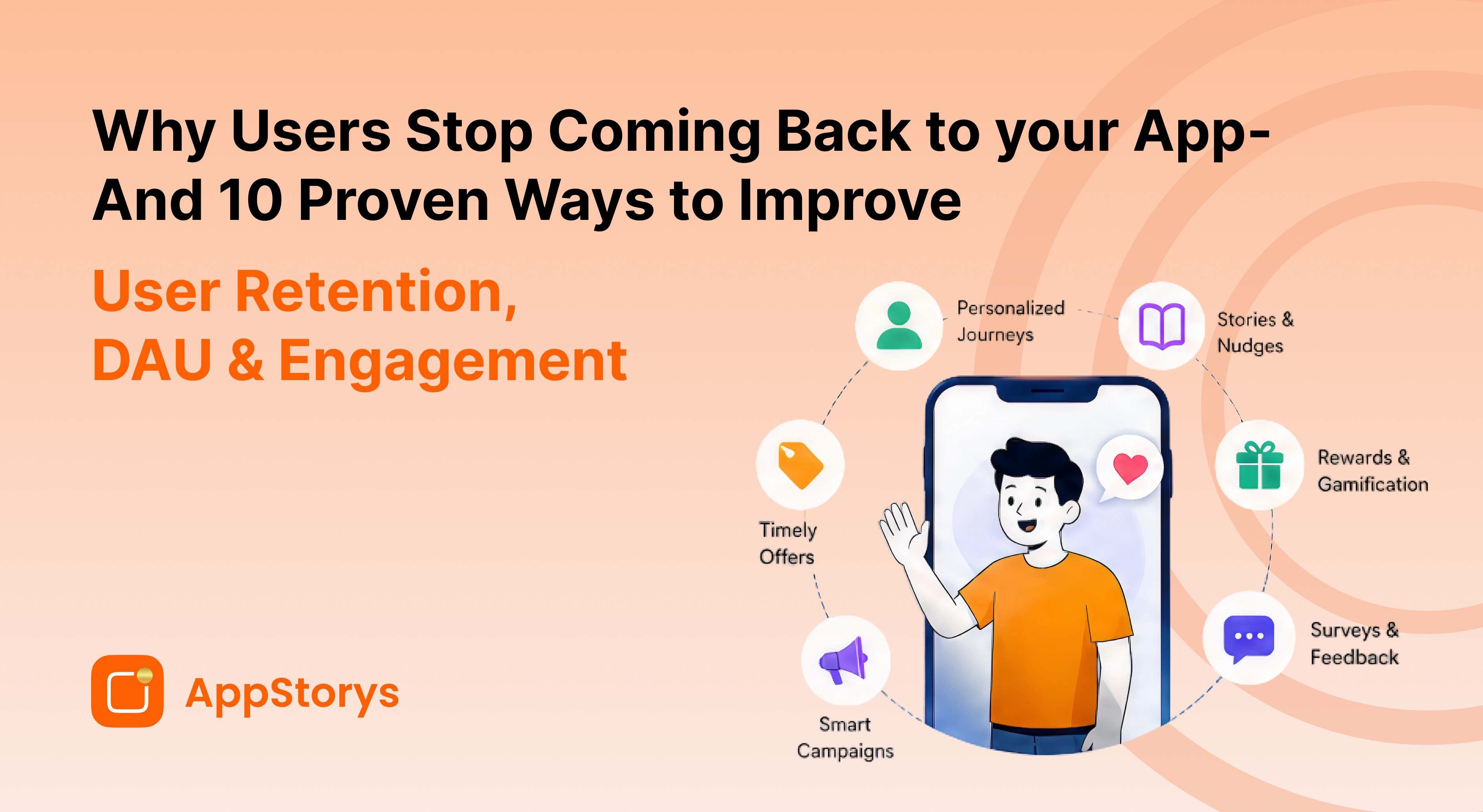
A functional app helps users complete tasks. An engaging app keeps users interacting beyond the task. That difference usually comes from an in-app engagement layer that includes:
- stories for discovery,
- rewards for repeat behaviour,
- CSAT for sentiment capture,
- surveys for user insight,
- notifications for reminders,
- and campaigns for conversion.
AppStorys is built specifically to provide this layer. Through a single dashboard, brands can deploy multiple engagement formats—Stories, Reels, Scratch Cards, Surveys, CSAT Forms, Floaters, Bottom Sheets, and more—without app release bottlenecks.
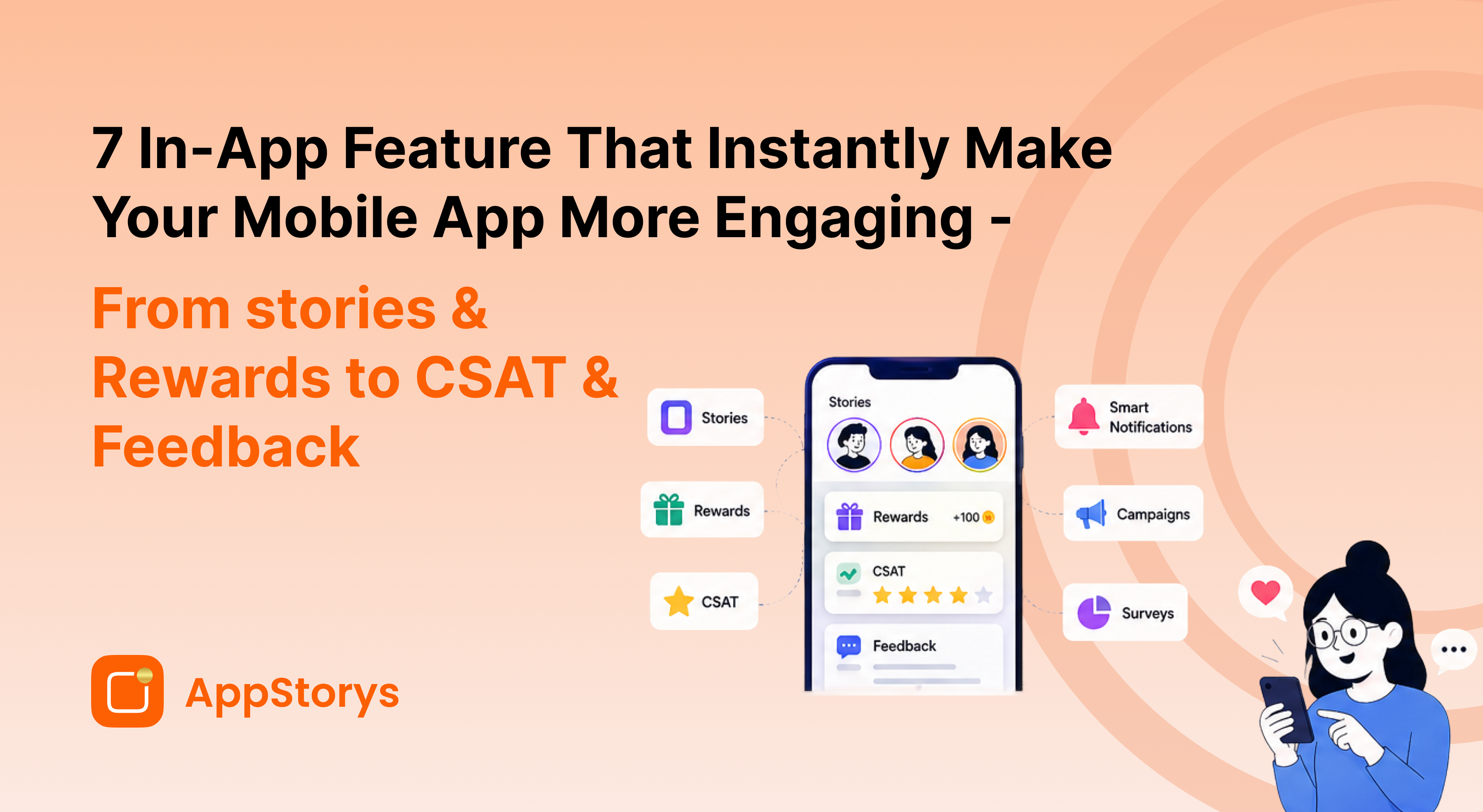
7 In-App Features That Instantly Make Your Mobile App More Engaging
1. Add Stories on Your App to Improve Discovery and Homepage Clicks
One of the fastest ways to make an app feel more interactive is to add stories on your app. Tappable story modules immediately create visual movement on the homepage and encourage users to explore feature updates, seasonal offers, and educational walkthroughs.
AppStorys Stories SDK allows brands to deploy Instagram-style visual story rows directly inside the app with no-code publishing controls, making it easy to refresh content frequently without developer intervention.
2. Launch Rewards Gamification on Your App to Encourage Repeat Visits
Users are more likely to return when actions feel rewarding. That is why rewards gamification on your app can significantly improve repeat behaviour through scratch cards, spin-to-win modules, and daily streak rewards.
With AppStorys Gamification modules, brands can launch reward-led campaigns tied to daily logins, completed transactions, and onboarding milestones. This turns passive usage into habit-forming participation.
3. Collect CSAT on Your App at High-Intent Moments
Many apps wait until users are dissatisfied enough to leave reviews. A smarter approach is to collect CSAT on your app while the user journey is still active.
AppStorys CSAT Forms and Polls allow brands to deploy one-click rating prompts contextually, helping teams catch friction early while also making users feel heard.
4. Integrate User Feedback in Your App Instead of Redirecting to External Channels
When you integrate user feedback in your app directly, response quality and volume both improve. Embedded feedback can include one-tap sentiment polls and micro surveys.
AppStorys Surveys and Feedback widgets make this process seamless by allowing brands to capture product insight within the exact screen where the user is experiencing the issue or opportunity.
5. Use Smart Notifications and In-App Alerts to Guide the Next Action
Smart notifications work when they are behaviour-triggered, personalized, and linked to unfinished actions. AppStorys helps brands not only send smarter notifications, but also pair them with in-app alerts and banners so the user lands into a complete engagement journey.
6. Launch Campaigns on Your App Without Waiting on Engineering Teams
Timing matters for festive sales or feature launches. AppStorys allows teams to launch campaigns on their app instantly through banners, floaters, bottom sheets, and spotlight overlays.
7. Combine Stories, Rewards, Feedback, and Campaigns Into One Continuous User Journey
The highest-performing apps create layered communication: Stories bring attention, Rewards sustain repeat behaviour, CSAT captures sentiment, and Notifications recover drop-offs.
How AppStorys Helps Brands Add Stories, Feedback, Rewards, and Notifications Without Heavy Development
Growth teams know what engagement formats they want to launch, but the bottleneck is deployment speed. AppStorys removes that bottleneck by providing a no-code SDK-led engagement layer where these modules can be published and optimized from one dashboard.
Conclusion
Apps become more engaging when they stop behaving like silent utilities and start behaving like active communication platforms. Users click more and return more often when the app consistently gives them something to discover.
Want to make your app more interactive? Start adding stories, rewards, and feedback with AppStorys today.